
A Memorial Song for Grandma, From Her Kitchen
Use a family recipe, a familiar gesture and a few honest memories to write a memorial song for your grandmother, with a Mexican Spanish song story.
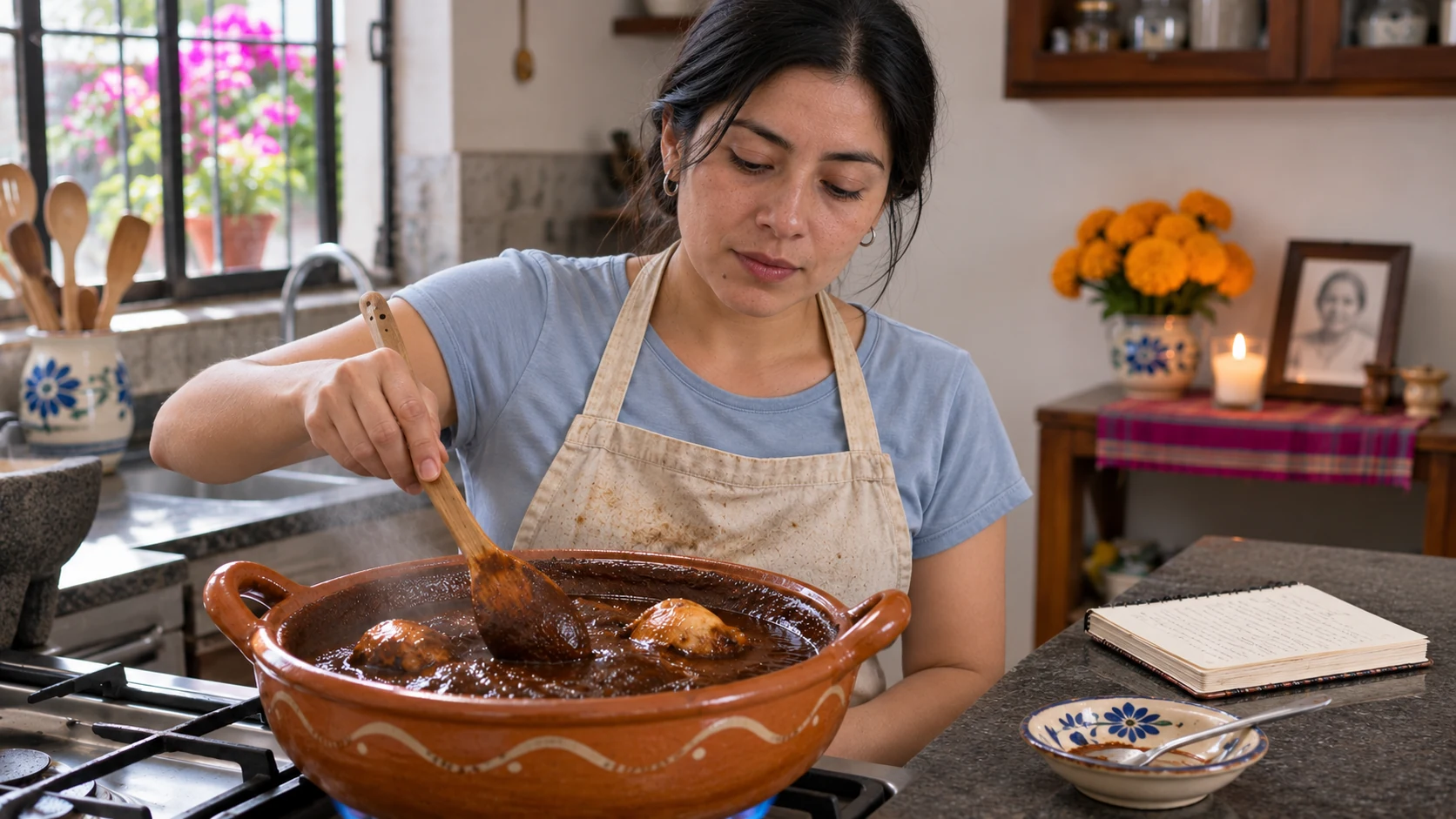
You can remember how someone cooked without remembering a single measurement. The heat went down when the sauce began to catch. A spoon appeared beside your mouth before you had time to ask. There was usually room for one more person at the table.
Those small actions can give a memorial song for your grandmother a place to begin. They let you write about the person you knew, in a voice that still sounds like yours.
The story behind “Tu receta sigue aquí”
Our Spanish-language song story follows Marisol, a fictional adult granddaughter preparing chicken mole for her family's November remembrance. Her grandmother has died. The recipe notebook on the counter is Marisol's own: a collection of things she remembers being shown, with new notes added as she tries them herself.
Her mother tastes the sauce and asks for more salt. Marisol laughs because the comment feels familiar. Later, an aunt begins an old family story and stops halfway through. Marisol passes her the serving spoon. Neither woman needs to finish a speech before they can sit down together.
The lyric's central line, “Tu receta sigue aquí,” means “Your recipe is still here.” The recipe includes the practical things her grandmother taught her and the habit of making space for someone else. The sauce comes out a little too thick. She can miss her grandmother and still serve dinner.
This is an original fictional family story inspired by published memories of cooking and remembrance in Mexico. Its characters, events and lyrics are newly written. It is not a customer testimonial or a retelling of one identifiable family's life. The accompanying illustration is AI-generated.
Give the memory one clear setting
For your own song, choose a place you can describe without searching for impressive words. It might be a kitchen, a market stall, a balcony or a table with a mark that never came out.
Write down what happened there. What did your grandmother ask you to do? Which task did she trust you with? What went wrong once and became a story everyone kept telling? A small imperfect moment often holds more of a person than a list of their virtues.
You do not need to make cooking the subject if it was not part of your relationship. The same approach works with a sewing repair, a favorite radio program or the route you walked together.
Keep the family's own customs
Mexico's Secretaría de Educación Pública describes food among the elements used in Día de Muertos ofrendas, while acknowledging differences in how they are arranged. A song can reflect the customs of one household without trying to speak for an entire country.
Marisol's family chooses a photograph, flowers, water and a portion of food. Another family's remembrance may look different. Include the objects and beliefs that belong to your story. You can describe setting a place and remembering someone without making a promise about what happens after death.
Let the language belong to the relationship
If you are writing a Spanish memorial song, use the name or family address you actually used. A nickname can matter more than a formal dedication. Keep a familiar expression when it brings the person into focus, and explain its meaning in the story you give the songwriter or tool.
Read the words aloud before making the music. Listen for sentences you would never say. Shortening a line can leave room for an important name or a breath. A song can hold affection and a little humor alongside grief; you do not have to make every verse solemn.
Begin with what you still do
Try three notes: something they taught you, something you still use, and something you wish you could ask them. Choose one thought for the chorus. That will give the song a center without asking it to contain a whole lifetime.
You can start a song from your own memories with Sung with Love. Lyrics can be created and edited for free; audio generation uses an allowance, and previews are limited to 60 seconds. A separate paid unlock covers the chosen full version, its MP3 and a gift page. For remembrance, take the time you need before deciding whether or how to share it.
The published memory that informed this editorial approach is Gabriela Flores Ramírez's personal writing about food and Día de Muertos. Her words, family details and photographs have not been reproduced in the song story.